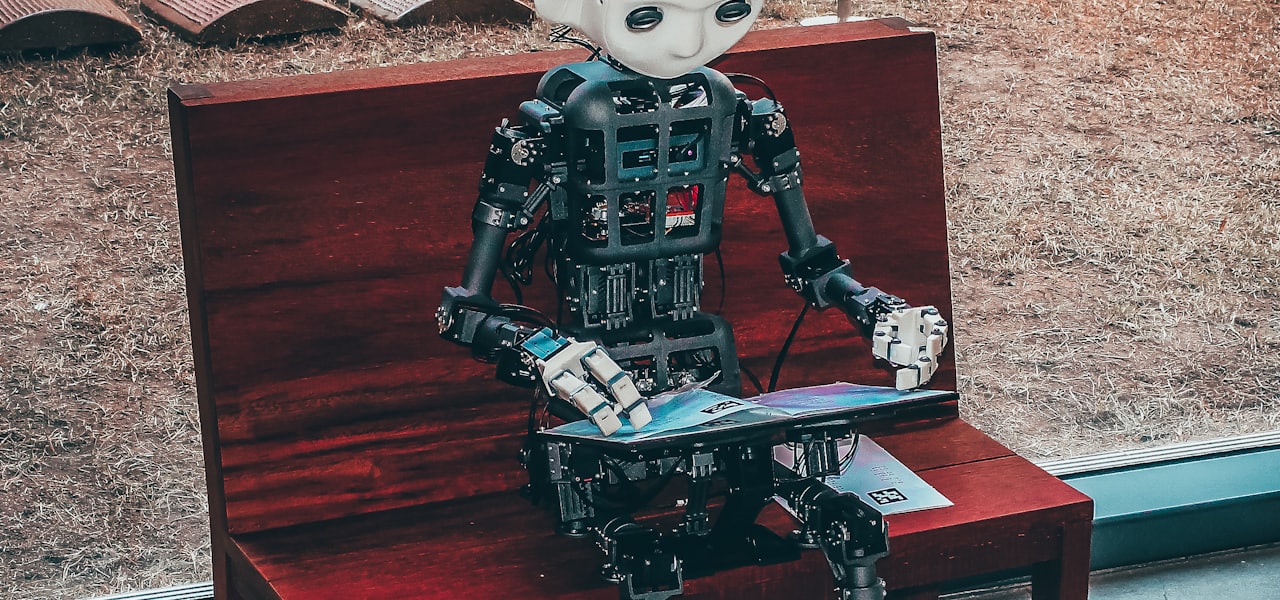
Timo Untamo Honkela (August 4, 1962 – May 9, 2020) was a computer scientist at the University of Helsinki, Aalto University School of Science and Aalto University School of Art, Design and Architecture. He holds a PhD from Helsinki University of Technology. From 2014 until 2018 he held a fixed-term professorship at the University of Helsinki. Before joining the University of Helsinki he worked as a non-tenured professor in two Schools of the Aalto University, The School of Art, Design and Architecture and the School of Science. He has presented his thoughts on his studies and work in the joint blog 375 Humanists. Timo Honkela conducted research on several areas related to knowledge engineering, cognitive modeling and natural language processing. Honkela was born in Kalajoki. From 1998 to 2000 he worked as a professor in the Aalto Media Lab. To the media Lab Honkela brought his expertise in Kohonen self-organising map (SOM) and worked closely with artist and designers around the topic. In 2001 Honkela collaborated with George Legrady to produce an interactive museum installation, Pockets Full of Memories to the Centre Georges Pompidou, National Museum of Modern Art in Paris. The concept, created by Legrady, provided for visitors a possibility to scan their own objects to a database and then organise them by Kohonen Self-Organizing Map algorithm. In 2017 Honkela published a book in Finnish. The book Rauhankone (English: Peace Machine) presents his idea of designing artificial intelligence and machine learning to serve humanity, in practice to help people to live in peace with each other. He died in Helsinki. == Publications == Timo Honkela, Wlodzislaw Duch, Mark Girolami and Samuel Kaski (editors): Artificial Neural Networks and Machine Learning, Springer, 2011. Jorma Laaksonen and Timo Honkela (editors): Advances in Self-Organizing Maps, Springer, 2011. Timo Honkela: Rauhankone. Gaudeamus, 2017.
Automation
Automation describes a wide range of technologies that reduce human intervention in processes, mainly by predetermining decision criteria, subprocess relationships, and related actions, as well as embodying those predeterminations in machines. Automation has been achieved by various means including mechanical, hydraulic, pneumatic, electrical, electronic devices, and computers, usually in combination. Complicated systems, such as modern factories, airplanes, and ships typically use combinations of all of these techniques. The benefits of automation includes labor savings, reducing waste, savings in electricity costs, savings in material costs, and improvements to quality, accuracy, and precision. Automation includes the use of various equipment and control systems such as machinery, processes in factories, boilers, and heat-treating ovens, switching on telephone networks, steering, stabilization of ships, aircraft and other applications and vehicles with reduced human intervention. Examples range from a household thermostat controlling a boiler to a large industrial control system with tens of thousands of input measurements and output control signals. In the simplest type of an automatic control loop, a controller compares a measured value of a process with a desired set value and processes the resulting error signal to change some input to the process, in such a way that the process stays at its set point despite disturbances. This closed-loop control is an application of negative feedback to a system. The mathematical basis of control theory began in the 18th century and advanced rapidly in the 20th. The term automation, inspired by the earlier word automatic (coming from automaton), was not widely used before 1947, when Ford established an automation department. It was during this time that the industry was rapidly adopting feedback controllers, Technological advancements introduced in the 1930s revolutionized various industries significantly. The World Bank's World Development Report of 2019 shows evidence that the new industries and jobs in the technology sector outweigh the economic effects of workers being displaced by automation. Job losses and downward mobility blamed on automation have been cited as one of many factors in the resurgence of nationalist, protectionist and populist politics in the US, UK and France, among other countries since the 2010s. == History == === Early history === It was a preoccupation of the Greeks and Arabs (in the period between about 300 BC and about 1200 AD) to keep an accurate track of time. In Ptolemaic Egypt, about 270 BC, Ctesibius described a float regulator for a water clock, a device not unlike the ball and cock in a modern flush toilet. This was the earliest feedback-controlled mechanism. The appearance of the mechanical clock in the 14th century made the water clock and its feedback control system obsolete. The Persian Banū Mūsā brothers, in their Book of Ingenious Devices (850 AD), described a number of automatic controls. Two-step level controls for fluids, a form of discontinuous variable structure controls, were developed by the Banu Musa brothers. They also described a feedback controller. The design of feedback control systems up through the Industrial Revolution was by trial-and-error, together with a great deal of engineering intuition. It was not until the mid-19th century that the stability of feedback control systems was analyzed using mathematics, the formal language of automatic control theory. The centrifugal governor was invented by Christiaan Huygens in the seventeenth century, and used to adjust the gap between millstones. === Industrial Revolution in Western Europe === The introduction of prime movers, or self-driven machines advanced grain mills, furnaces, boilers, and the steam engine created a new requirement for automatic control systems including temperature regulators (invented in 1624; see Cornelius Drebbel), pressure regulators (1681), float regulators (1700) and speed control devices. Another control mechanism was used to tent the sails of windmills. It was patented by Edmund Lee in 1745. Also in 1745, Jacques de Vaucanson invented the first automated loom. Around 1800, Joseph Marie Jacquard created a punch-card system to program looms. In 1771 Richard Arkwright invented the first fully automated spinning mill driven by water power, known at the time as the water frame. An automatic flour mill was developed by Oliver Evans in 1785, making it the first completely automated industrial process. A centrifugal governor was used by Mr. Bunce of England in 1784 as part of a model steam crane. The centrifugal governor was adopted by James Watt for use on a steam engine in 1788 after Watt's partner Boulton saw one at a flour mill Boulton & Watt were building. The governor could not actually hold a set speed; the engine would assume a new constant speed in response to load changes. The governor was able to handle smaller variations such as those caused by fluctuating heat load to the boiler. Also, there was a tendency for oscillation whenever there was a speed change. As a consequence, engines equipped with this governor were not suitable for operations requiring constant speed, such as cotton spinning. Several improvements to the governor, plus improvements to valve cut-off timing on the steam engine, made the engine suitable for most industrial uses before the end of the 19th century. Advances in the steam engine stayed well ahead of science, both thermodynamics and control theory. The governor received relatively little scientific attention until James Clerk Maxwell published a paper that established the beginning of a theoretical basis for understanding control theory. === 20th century === Relay logic was introduced with factory electrification, which underwent rapid adaptation from 1900 through the 1920s. Central electric power stations were also undergoing rapid growth and the operation of new high-pressure boilers, steam turbines and electrical substations created a great demand for instruments and controls. Central control rooms became common in the 1920s, but as late as the early 1930s, most process controls were on-off. Operators typically monitored charts drawn by recorders that plotted data from instruments. To make corrections, operators manually opened or closed valves or turned switches on or off. Control rooms also used color-coded lights to send signals to workers in the plant to manually make certain changes. The development of the electronic amplifier during the 1920s, which was important for long-distance telephony, required a higher signal-to-noise ratio, which was solved by negative feedback noise cancellation. This and other telephony applications contributed to the control theory. In the 1940s and 1950s, German mathematician Irmgard Flügge-Lotz developed the theory of discontinuous automatic controls, which found military applications during the Second World War to fire control systems and aircraft navigation systems. Controllers, which were able to make calculated changes in response to deviations from a set point rather than on-off control, began being introduced in the 1930s. Controllers allowed manufacturing to continue showing productivity gains to offset the declining influence of factory electrification. Factory productivity was greatly increased by electrification in the 1920s. U.S. manufacturing productivity growth fell from 5.2%/yr 1919–29 to 2.76%/yr 1929–41. Alexander Field notes that spending on non-medical instruments increased significantly from 1929 to 1933 and remained strong thereafter. The First and Second World Wars saw major advancements in the field of mass communication and signal processing. Other key advances in automatic controls include differential equations, stability theory and system theory (1938), frequency domain analysis (1940), ship control (1950), and stochastic analysis (1941). Starting in 1958, various systems based on solid-state digital logic modules for hard-wired programmed logic controllers (the predecessors of programmable logic controllers [PLC]) emerged to replace electro-mechanical relay logic in industrial control systems for process control and automation, including early Telefunken/AEG Logistat, Siemens Simatic, Philips/Mullard/Valvo Norbit, BBC Sigmatronic, ACEC Logacec, Akkord Estacord, Krone Mibakron, Bistat, Datapac, Norlog, SSR, or Procontic systems. In 1959 Texaco's Port Arthur Refinery became the first chemical plant to use digital control. Conversion of factories to digital control began to spread rapidly in the 1970s as the price of computer hardware fell. === Significant applications === The automatic telephone switchboard was introduced in 1892 along with dial telephones. By 1929, 31.9% of the Bell system was automatic. Automatic telephone switching originally used vacuum tube amplifiers and electro-mechanical switches, which consumed a large amount of electricity. Call volume eve
How to Choose an AI Photo Editor
In search of the best AI photo editor? An AI photo editor is software that uses machine learning to help you get more done — it turns a rough idea into a polished result in seconds. When choosing one, weigh output quality, pricing, export formats, and how well it fits the tools you already use. Whether you are a beginner or a pro, the right AI photo editor slots into your workflow and pays for itself fast. Below we compare features, pricing, and real output so you can choose with confidence.
AI Video Generators Reviews: What Actually Works in 2026
Comparing the best AI video generator? An AI video generator is software that uses machine learning to help you get more done — it lowers the barrier so anyone can produce professional output. Privacy matters too: check whether your data trains the model and whether a no-log or enterprise tier is available. Whether you are a beginner or a pro, the right AI video generator slots into your workflow and pays for itself fast. We tested the leading options and ranked them by quality, value, and ease of use.
Markov information source
In mathematics, a Markov information source, or simply, a Markov source, is an information source whose underlying dynamics are given by a stationary finite Markov chain. == Formal definition == An information source is a sequence of random variables ranging over a finite alphabet Γ {\displaystyle \Gamma } , having a stationary distribution. A Markov information source is then a (stationary) Markov chain M {\displaystyle M} , together with a function f : S → Γ {\displaystyle f:S\to \Gamma } that maps states S {\displaystyle S} in the Markov chain to letters in the alphabet Γ {\displaystyle \Gamma } . A unifilar Markov source is a Markov source for which the values f ( s k ) {\displaystyle f(s_{k})} are distinct whenever each of the states s k {\displaystyle s_{k}} are reachable, in one step, from a common prior state. Unifilar sources are notable in that many of their properties are far more easily analyzed, as compared to the general case. == Applications == Markov sources are commonly used in communication theory, as a model of a transmitter. Markov sources also occur in natural language processing, where they are used to represent hidden meaning in a text. Given the output of a Markov source, whose underlying Markov chain is unknown, the task of solving for the underlying chain is undertaken by the techniques of hidden Markov models, such as the Viterbi algorithm.
FedRAMP
The Federal Risk and Authorization Management Program (FedRAMP) is a United States federal government-wide compliance program that provides a standardized approach to security assessment, authorization, and continuous monitoring for cloud products and services. The US government describes FedRAMP as FISMA for the cloud. == Overview == The FedRAMP PMO mission is to promote the adoption of secure cloud services across the federal government by providing a standardized approach to security and risk assessment. Per the OMB memorandum, any cloud services that hold federal data must be FedRAMP authorized. FedRAMP prescribes the security requirements and processes that cloud service providers must follow in order for the government to use their service. There are two ways to authorize a cloud service through FedRAMP: a Joint Authorization Board (JAB) provisional authorization (P-ATO), and through individual agencies. FedRAMP provides accreditation for cloud services for the various cloud offering models which are Infrastructure as a Service (IaaS), Platform as a Service (PaaS), and Software as a Service, (SaaS). == History == In 2011, the Office of Management and Budget (OMB) released a memorandum establishing FedRAMP "to provide a cost-effective, risk-based approach for the adoption and use of cloud services to Executive departments and agencies." The General Services Administration (GSA) established the FedRAMP Program Management Office (PMO) in June 2012. Before the introduction of FedRAMP, individual federal agencies managed their own assessment methodologies following guidance set by the Federal Information Security Management Act of 2002. == Governance and applicable laws == FedRAMP is governed by different Executive Branch entities that collaborate to develop, manage, and operate the program. These entities include: The Office of Management and Budget (OMB): The governing body that issued the FedRAMP policy memo, which defines the key requirements and capabilities of the program The Joint Authorization Board (JAB): The primary governance and decision-making body for FedRAMP comprises the chief information officers (CIOs) from the Department of Homeland Security (DHS), General Services Administration (GSA), and Department of Defense (DOD) The National Institute of Standards and Technology (NIST): Advises FedRAMP on FISMA compliance requirements and assists in developing the standards for the accreditation of independent 3PAOs The Department of Homeland Security (DHS): Manages the FedRAMP continuous monitoring strategy including data feed criteria, reporting structure, threat notification coordination, and incident response The Federal Chief Information Officers (CIO) Council: Disseminates FedRAMP information to Federal CIOs and other representatives through cross-agency communications and events The FedRAMP PMO: Established within GSA and responsible for the development of the FedRAMP program, including the management of day-to-day operations There are several laws, mandates, and policies that are foundational to FedRAMP. FISMA–the Federal Information Security Modernization Act–requires that agencies authorize the information systems that they use. The US government describes FedRAMP as FISMA for the cloud. The FedRAMP Policy Memo requires federal agencies to use FedRAMP when assessing, authorizing, and continuously monitoring cloud services in order to aid agencies in the authorization process as well as save government resources and eliminate duplicative efforts. FedRAMP's security baselines are derived from NIST SP 800-53 (as revised) with a set of control enhancements that pertain to the unique security requirements of cloud computing. == Third-party assessment organizations == Third-party assessment organizations (3PAOs) play a critical role in the FedRAMP security assessment process, as they are the independent assessment organizations that verify cloud providers' security implementations and provide the overall risk posture of a cloud environment for a security authorization decision. Accredited by the American Association for Laboratory Accreditation (A2LA), these assessment organizations must demonstrate independence and the technical competence required to test security implementations and collect representative evidence. == FedRAMP Marketplace == The FedRAMP Marketplace provides a searchable, sortable database of Cloud Service Offerings (CSOs) that have achieved a FedRAMP designation. 3PAOs, accredited auditors that can perform the FedRAMP assessment, are listed within the Marketplace. The FedRAMP Marketplace is maintained by the FedRAMP Program Management Office (PMO). == Security and authorization concerns == A 2026 ProPublica investigation found that FedRAMP entered into a partnership with Microsoft despite considerable concerns about the security of its cloud technology.
The Best Free AI Art Generator for Beginners
Trying to pick the best AI art generator? An AI art generator is software that uses machine learning to help you get more done — it scales effortlessly from a single task to thousands. The best picks balance beginner-friendly simplicity with the depth power users need, and they ship updates often. Whether you are a beginner or a pro, the right AI art generator slots into your workflow and pays for itself fast. This guide breaks down the top picks, their pros and cons, and who each one is best for.